Monday, May 19, 2014

Great American Fortunes - August Belmont: The Grand Sachem of New York City


PHOTO by Kurz & Allison circa 1871
In 1877, Charles Dana’s New York Sun reported: “He taught New Yorkers how to eat, how to drink, how to dress, how to drive four-in-hands, how to furnish their houses, how to live generally according to the rules of the possibly somewhat effete, but unquestionably refined, society of the Old World.”

August Belmont, the subject of Dana’s story, was a man who ended up in the U. S. by accident, not by design, fell in love with the country, amassed a great fortune, and changed New York forever.

 Born in Germany, Belmont attended a Jewish school, where he was considered untidy, ungovernable, rowdy, and as bullheaded as he was bright. When his father stopped paying for his tuition, Belmont landed a job with the Rothschilds, sweeping floors and polishing furniture. At night he studied French, English, and honed his writing and math skills. Ultimately Belmont became Amschel von Rothschild’s private secretary.

The Rothschilds had major interests in Cuba and sent Belmont to Havana in 1837 to analyze the impact of the Spanish civil war on the island’s economy and on their investments. En route, Belmont stopped in New York City which was in the grip of the Panic of 1837. Belmont decided to visit Rothschilds’ American agents, but discovered they had ceased to exist.

Without consulting the Rothschilds, Belmont remained in New York and took over their American interests. He began to acquire banks and bank notes at depressed prices and made a fortune for the Rothschilds. They rewarded him with a bonus, a $10,000-a-year salary, and a permanent position in the U.S.

Hot tempered, aloof, and at times disdainful, Belmont fought a duel over an insult, the bullet shattering his hip bone. The newspapers accused him of being a roué, but since duels were only fought by gentlemen, Belmont became a “gentleman” in the eyes of Knickerbocker society. The bluebloods began to crave invitations to his extravagant soirées.

 In 1844 he became a naturalized American citizen and five years later married Commodore Matthew Perry’s daughter. Having accumulated a fortune, he turned to politics, working for James K. Polk’s presidential campaign and developing strong ties with the Democratic Party. Subsequently he ran Buchanan’s campaign in New York for the Democratic presidential nomination, but supported Franklin Pierce after he won the nomination. A grateful President Pierce reciprocated by naming Belmont chargé d’affaires at The Hague.

Belmont’s rapid rise to power—by 1860 he was the chairman of the Democratic National Committee—brought about insulting attacks from the Republican press, especially Horace Greeley’s Tribune. Carl Sandburg applauded Belmont’s “anger and courage” in the face of such caustic assaults.

During the Civil War Belmont raised millions for the Union and became an adviser to President Lincoln.

Belmont sponsored a new horse race, the Belmont Stakes. The first running took place in 1867, making it the oldest of the three Triple Crown events. Belmont Park is named after him and his imprint is intertwined with the history of the Kentucky Derby. Belmont died in 1890, leaving a fortune in excess of $50 million.

 © 2008 by Daniel Alef, syndicated columnist and award-winning author of “Pale Truth,” an American historical novel. Mr. Alef can be reached at dalef@titansoffortune.com.
For more information about Wall Street and New York's Financial District, join a Wall Street Walks guided walking tour!

Wednesday, May 14, 2014

The New Sheriffs of Wall Street: Where Are They Now?


The New Sherriffs of Wall Street
In May, 2010, Time Magazine identified the “New Sheriffs of Wall Street” as three women whose jobs were to then clean up the Wall Street mess that was referred to as the “Great Recession”.  Included were Sheila Bair, the chair of the Federal Deposit Insurance Corporation (FDIC) and one of the first federal regulators to publicly sound the alarm about the collapse a few years earlier; Securities and Exchange Commission (SEC) chair Mary Schapiro, the first woman to hold that post and the deciding vote to initiate the agency's lawsuit against Goldman Sachs; and Elizabeth Warren, chair of the panel monitoring the Troubled Asset Relief Program (TARP) bank bailout and the chief advocate for new consumer-finance regulations that banks and their allies have fought furiously to oppose.   These women may not have run Wall Street, but in this new era, they were getting Wall Street to clean up its act.

To quote the Time article:

“A few weeks back, at an event to celebrate the role of women in finance, Treasury Secretary Timothy Geithner tried to get things started with a joke. He said he had recently come across a headline that asked, "What If Women Ran Wall Street?"

“Now that's an excellent question, but it's kind of a low bar," Geithner continued, deadpan amid rising laughter. "How, you might ask, could women not have done better?"

It is rarely noted that the financial wreckage littering our world is the creation, almost exclusively, of men, not women. And no wonder: to this day, each of the large banks, from Citigroup to Goldman Sachs, employs fewer than a handful of women in senior positions, and only 3% of Fortune 500* companies have a woman as CEO. Embarrassing tales of a testosterone-filled trading culture tumbled out of the what-went-wrong probes as the Great Recession took hold“.

* Update:  According to Catalyst.Org, January, 2014, women currently hold 4.6 percent of Fortune 500 CEO positions and 4.6 percent of Fortune 1000 CEO positions.

Soon you will be able to visit one of the former “New Sheriffs of Wall Street”, Shelia Bair, and find out where she is now.  At another time, we will catch up with Mary Schapiro and Elizabeth Warren.
First serving under President Bush and later President Obama, Shelia Bair was the Chairman of the Federal Deposit Insurance Corporation during one of the nation’s most turbulent economic eras in history, from 2006-2011.  After the 2008 collapse and upheaval of U.S. and global markets as well as venerable financial institutions, Chairman Bair worked to bolster public confidence and financial system stability that resulted in no runs on bank deposits. The FDIC did not turn to taxpayer borrowing to manage its losses and liquidity needs, instead funding them through its traditional means of assessing banks for the cost of insuring their deposits. The FDIC’s resolution practice of selling failing banks to healthier institutions, while providing credit support of future losses from failed banks’ troubled loans, saved the FDIC’s Deposit Insurance Fund, tens of billions of dollars over losses it would have incurred if the FDIC had liquidated those banks.
Her efforts established her as an ardent advocate and innovator of policies to end the doctrine of too-big-to-fail and taxpayer bailouts.

A working mother and lawyer hailing from Kansas, Bair’s illustrious Curriculum Vitae reads like a Who’s Who in public life:  among her positions were counsel to Senator Bob Dole in his Washington office; Assistant Secretary of the Treasury for Financial Markets; and executive level positions at the Government Relations of the New York Stock Exchange; The Commodity Futures Trading Commission and in academia - the Dean’s Professor of Financial Regulatory Policy at UM Amherst.

Shelia Bair, former Chairperson of the U.S. FDIC.
with Ben Bernanke & Hank Paulson
When Bair’s term at the FDIC was over she left in 2011, first serving as an adviser to the nonprofit Pew Charitable Trusts,  then leading a new private sector group called the Systemic Risk Council whose mission will be to encourage reform.   Here in the U.S., the Dodd-Frank law was designed, in part, to eliminate systemic risk - that is, the idea that the failure of one institution could be big enough to bring down an entire economy. Implementing financial reform has taken longer than expected, though, and that has many watchdogs increasingly on edge.
Traditionally issues are raised as one moves from regulator to regulated.  
In order to avoid conflicts, Ms. Bair has decided not to work for a financial services firm in the United States.

Earlier this year, Bair joined the board of Spanish bank Santander, one of the largest banks in Europe with vast operations in the U.S., having amassed a number of banks in the wake of the financial crisis.

“I hope that my service on the Santander board will provide yet another avenue for continuing my commitment to reforming the global financial system and contributing to a safer, more responsible, and customer oriented banking system,” Bair said in a statement.

At Santander, Bair, as an independent director, will help advise on the running of a bank whose asset base is as big as the Spanish economy and with the biggest market value of any lender in the euro zone. 

Tim Geithner isn't alone in asking the question, What if women, not men, were the real powers on Wall Street? With the successful tenures of Bair, Schapiro and Warren, we are finally getting an answer.  They were fabulous!


For more information about Wall Street and New York's Financial District, join a Wall Street Walks guided walking tour!

Monday, May 12, 2014

Great American Fortunes - Walter Annenberg: King of Communication

PHOTO: The Annenberg Foundation
German-born Moses Annenberg owned several tabloids devoted to horse racing and the theater. He also owned a wire service catering to horse racing; it was Bell Telephone's fifth-largest customer.

Moses lived on a 2,000-acre ranch in the Black Hills of Wyoming with his wife, seven daughters and son, Walter. After attending the Wharton School for a year, Walter joined his father’s business. Together they acquired the Miami Tribune, Radio Guide, and several pulp magazines. But in 1936 they made their biggest acquisition, the Philadelphia Inquirer for $15 million—in cash!

Six months later, the IRS indicted Moses and Walter for tax-evasion. Moses agreed to pay $9 million, plead guilty, and go to prison if the IRS would drop the charges against Walter. The IRS agreed. Moses went to prison to serve a three-year sentence.

Walter took the reins of the publishing empire, paid the taxes and renamed the company Triangle Publications. He kept his father's office untouched, but Moses never returned; he died a month after his release from prison.

Annenberg inherited millions from his father and turned it into billions. He had a good sense for media communication. With no magazines catering to young women, he started Seventeen magazine in 1944 and named one of his sisters as editor.

A year later he acquired WFIL AM & FM and, in 1947, formed WFIL-TV Channel 6 in Philadelphia; it became one of the most profitable TV stations in the country. Triangle acquired other TV operations in Pennsylvania, New York, Connecticut and California. There were several local TV magazines: TV Digest in Philadelphia, TV Forecast in Chicago, and TV Guides in New York and Washington, D.C. Annenberg acquired them for $3 million and, in April 1953, combined them into a new magazine, TV Guide. TV Guide, was a peculiar magazine, small enough to fit in one's pocket and bearing a price of 15 cents. Pundits scoffed, wondering how a tiny magazine that provided the same information already available in dailies around the country would succeed, but by 1977 it had the largest circulation of any American magazine, 20 million weekly, while generating $1 million in profits—weekly!

Staunchly conservative, Annenberg joined President Nixon's "Kitchen Cabinet" and became a close friend of Ronald Reagan. Yet he vehemently opposed Sen. Joseph McCarthy. Nixon named Annenberg America's ambassador to the Court of St. James in 1969.

Annenberg sold TV Guide and the rest of his Triangle Publications to Rupert Murdoch's News Corp. for $3 billion in 1988.

Annenberg was a great philanthropist. One educator said he “was to public education what Andrew Carnegie was to libraries.” Annenberg funded the Annenberg School for Communications at USC, Temple and the University of Pennsylvania. He also gave $25 million to Harvard, $100 million to Peddie, $150 million to the Corporation for Public Broadcasting, $50 million to the United Negro College Fund, and $500 million for public school improvement throughout the United States. He died in 2002, bequeathing his $1 billion art collection to New York's Metropolitan Museum of Art.

© 2008 by Daniel Alef


For more information about Wall Street and New York's Financial District, join a Wall Street Walks guided walking tour!

Friday, May 9, 2014

Introducing our guest writer Daniel Alef and his Great American Fortunes series

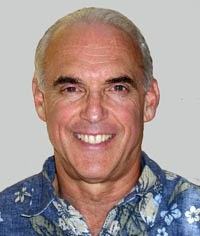
Daniel Alef
We are very pleased to be given the opportunity to publish excerpts of Daneil Alef's Great American Fortunes series of biographies. Look for several installments to roll out on the Wall Street Walks blog over the few months. Daniel Alef's bio is quite impressive:

Great American Fortunes is brought to you by Daniel Alef, an award-winning author of PALE TRUTH, an American historical novel, former syndicated columnist, attorney, and executive. He has been an author of articles in the U.S. and abroad ranging from the Journal of Taxation and American Profile to Australian Business Solutions, one tax book for the Bureau of National Affairs (now Bloomberg BNA), and a contributor to Sage Publishing’s ”Gender & Women’s Leadership: A Reference Handbook.” Mr. Alef has been a “best-selling author” in the Apple iBookstore and his ebook titles have been best-sellers on Amazon’s Kindle. Mr. Alef has appeared on Biography.com, in segments on Steve Jobs and Mark Zuckerberg and on Discovery’s Military Channel in connection with Neil Armstrong, J. Edgar Hoover, and Sterling Hayden, Wehrner von Braun, “Wild Bill” Donovan, the House Committee on un-American Activities and Kelly Johnson. He was recently featured on NPR, German Public Radio, and was quoted in Investors Business Daily in articles on, William Wrigley, Cyrus McCormick, Warren Bechtel, Cornelius Vanderbilt, J.P. Morgan, George Pullman, Alfred Sloan, and Jack Northrop.

Mr. Alef attended UCLA (BS), UCLA Law School (JD), the London School of Economics and Political Science (LL.M.), and Cambridge University (Queen’s College). He can be reached at dalef@titansoffortune.com.

Daniel Alef
Titans of Fortune Biographical Profiles


For more information about Wall Street and New York's Financial District, join a Wall Street Walks guided walking tour!
Monday, March 31, 2014

On This Day in 1913: the Death of JP Morgan, Philanthropist


JP Morgan, Philanthropist: How did he pay it forward?

April 17, 1837 - March 31, 1913

John Pierpont Morgan may have died 101 years ago, but his New York City philanthropic legacy lives on through a progressive New York City housing movement experiment and a settlement house. 

Morgan, one of the country’s most famous and important financiers in American history, is forever known for his contributions and influence in the development of corporate icons such as General Electric, International Harvester, U.S. Steel, and the railroad corporations among others.

He calmed the storm in the Panic of 1907 by essentially acting as the “central bank”…today, he would be comparable to Warren Buffet.

Lesser known are his contributions as a philanthropist…even over a century after his death we ask the question: How did he pay it forward?

Two of the greatest philanthropic projects Morgan helped blossom into major successful social experiments of his time, are still in existence and flourishing today.  They include:

East Side House Settlement - Morgan was a major donor to this project, founded in 1891 as a settlement house on New York's Upper East Side neighborhood called Yorkville, and home to a massive immigration population explosion in the late 1890’s.


The urban settlement house movement was a reformist social movement, beginning in the 1880s and peaking around the 1920s, with a goal of providing services to the working poor and new immigrants.  These social services included an introduction to American culture, homemaking, daycare, education, and healthcare to improve the lives of the poor in these areas. In the US, by 1913 there were over 400 settlements in 32 states.

The settlement house was the hub of the community.  Immigrant parents took classes to introduce them to New York City, childrearing, and the city’s schools system.  Children had classes in art, painting, athletics and academic pursuits.  Young adults came to the dances at the East Side House…some even meeting their future spouses there!  Mothers had training in homemaking and some even found employment there washing laundry.

East Side House Settlement also worked on getting children out of the city for fresh air in the country at summer camps.  This was of such great interest to Morgan, that one weekend he opened his own estate to the youngsters. 

Settlement houses influenced urban design, architecture and model tenement experiments of the housing reform movement in the late 1800s and early 1900s.

Today the East Side House Settlement, now located in the Bronx, is flourishing and still carries on its mission from over a century ago.

City & Suburban Homes Model Tenements – Morgan’s interest in limited dividend companies, dedicated to providing profit to their investors, as well as creating affordable housing for the working poor, led to his and his descendants becoming donors and their continued involvement on the board of directors of City & Suburban Homes company.  The model tenements were not only an urban design experiment created by some of the members of the East Side House Settlements major donors, but also launched philanthropic interest in the new concept of  “benign capitalism” which is a not wholly philanthropic venture, but a business venture where the stockholders agree to receiving a limited dividend [usually 4% - 7%] and the leftover funds go into continuing building new housing.

Other early supporters, included some of the New York’s socially prominent and important philanthropic families, such as Morgan’s descendants, the Carnegie’s, Vanderbilt’s, Rockefeller’s, Astor’s, Auchincloss, and Gould’s.

One of the most significant projects in the history of the reform housing movement, it was designed in response to the horrific living conditions of working poor areas such as the Lower East Side, at that time, one of the most densely populated neighborhood in the world.  Photographer, Jacob Riis, who published photographs of the horrors of tenement life, and Lillian Wald, one of the most respected social reformers and advocates for the poor, among others, drew public attention to the plight of these families, thus making it a popular cause for well-to-do New Yorkers…either for their own charitable reasons, or because they feared the spread of disease, crime caused by the lamentable unsanitary and overcrowding in these early types of tenements which had a sudden increase of the city’s population caused by massive immigration.  The publicity led to the creation successful reform housing movement.

The City & Suburban Homes York Avenue Estate is one of the most significant projects in the history of the reform housing movements in New York City. Built between 1901 and 1913, the 14 model tenements are a New York City Landmark and were placed on the New York State and the National Registers of Historic Places.

The largest low cost housing development in the world at the time of its construction became the model for all large scale public housing post WWII and remains an excellent example of reform housing.


In a gesture usually reserved for heads of state, when John Pierpont Morgan died on March 31, 1913, in Italy, at the age of 75, the New York Stock Exchange was closed for several hours that day to honor a multifaceted man, whose many ways to “pay it forward” are still being discovered today.


For more information about Wall Street and New York's Financial District, join a Wall Street Walks guided walking tour!

Wednesday, March 26, 2014

Visit the 911 Memorial Museum, Opening May 21, 2014

Visit the 911 Memorial Museum
From a press release today:

The National September 11 Memorial Museum will open to the public on Wednesday, May 21, marking a milestone in the rebuilding of the World Trade Center.

Starting today, you can reserve your tickets to the Museum at www.911memorial.org/visit. Various discounts are offered, including free admission hours every Tuesday from 5 p.m. to 8 p.m. Thanks to the global media company Condé Nast, admission will be free for all visitors on the historic opening day of the Museum on May 21. Admission to the Museum will always be free for 9/11 family members. Rescue and recovery workers who participated in the response on and after 9/11 and are registered with the Memorial are also free. 

As always, Wall Street Walks will be offering guided tours of the 911 Memorial to our private groups. If you'd like to book a tour of Wall Street and/or the 911 Memorial for your group, please click here.

To join one of our daily public tours of Wall Street (all of which end at the 911 Memorial for your convenience), please click here.


For more information about Wall Street and New York's Financial District, join a Wall Street Walks guided walking tour!

Friday, February 14, 2014

Wall Street Walks Featured on Hopper

Wall Street Walks featured on Hopper
Wall Street Walks just got a great write-up on the travel blog Hopper in an article titled "Experience the Real World of High Finance on Wall Street." They even gave us our own page, complete with reviews and travel suggestions! Very cool. Hopper is highly recommended. Click through to read the full article, which covers much more than our walking tours.


For more information about Wall Street and New York's Financial District, join a Wall Street Walks guided walking tour!